
19 Haircuts for Thick Hair That Reduce Bulk and Add Movement
Thick hair holds volume and shape well, but it can also feel heavy, take forever to dry, and clump together instead of moving freely. The right haircut makes a real difference, removing weight in the places that need it while keeping your hair looking full rather than flat. This guide covers 19 haircuts for thick hair across short, medium, long, and curly lengths, the cutting techniques that actually reduce bulk, and how to talk to your stylist so you don’t end up over-thinned.
Why Thick Hair Needs a Different Approach
Thick hair refers to hair density, meaning how many strands you have per section of scalp, not just how coarse each individual strand feels. Because there’s simply more hair, a blunt, one-length cut can end up looking like a heavy block instead of a shaped style. The goal with thick hair isn’t to remove length, it’s to remove weight from the right places so the hair moves naturally instead of sitting like a solid mass.
Cutting Techniques Explained
A few terms come up constantly when discussing thick hair, and it helps to know what each one actually does.
- Layering: Cutting hair at varying lengths throughout, rather than one uniform length. This is the most common way to remove bulk while keeping overall length.
- Point cutting: Cutting vertically into the ends of the hair rather than straight across, which softens blunt lines and removes some weight without changing the overall shape.
- Thinning shears: Scissors with teeth on one blade, used to remove select strands rather than cutting cleanly across a section. These work best on the ends only, never close to the root, since over-thinning near the scalp creates a frayed, uneven look.
- Slide cutting: A technique where the stylist slides the shears along the hair while cutting, removing weight gradually for a soft, natural taper rather than a hard line.
If you’re asking for any of these, bring reference photos and be specific about whether you want length removed or just weight removed, since those are two different requests.
19 Haircuts for Thick Hair
Short Haircuts
Bixie (Pixie-Bob Hybrid)
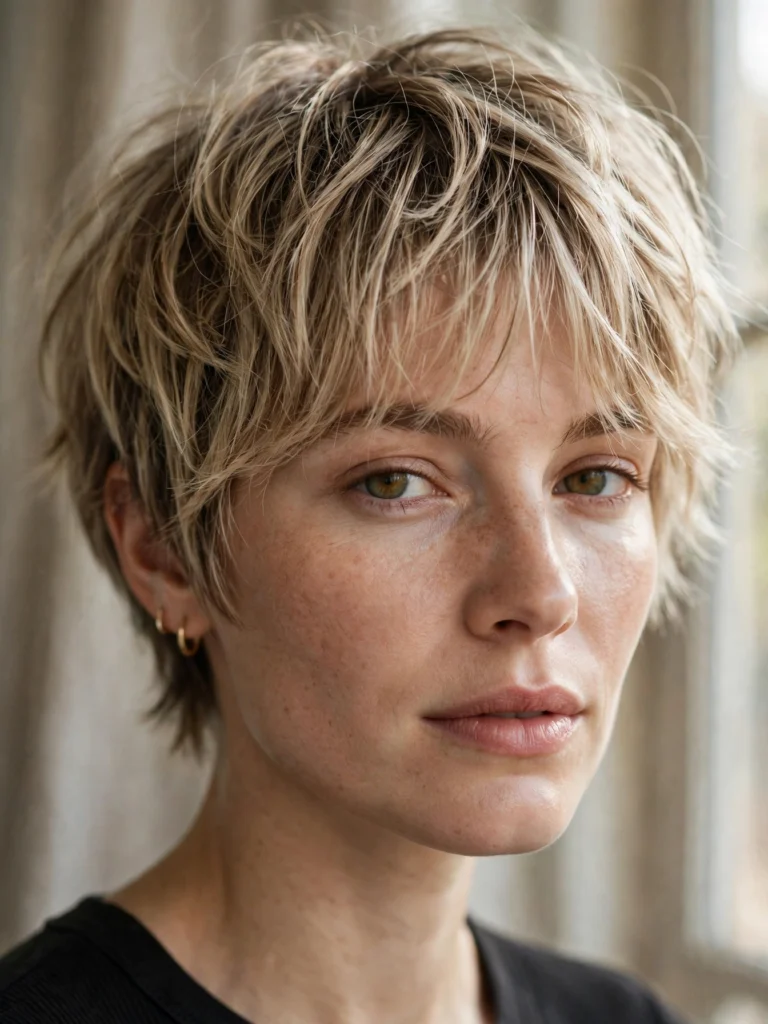
A length that falls between a pixie and a bob, with choppy layers cut throughout for texture. It’s become one of the most recommended short cuts for thick hair specifically because the internal layering removes bulk while the slightly longer length (compared to a full pixie) keeps some styling versatility.
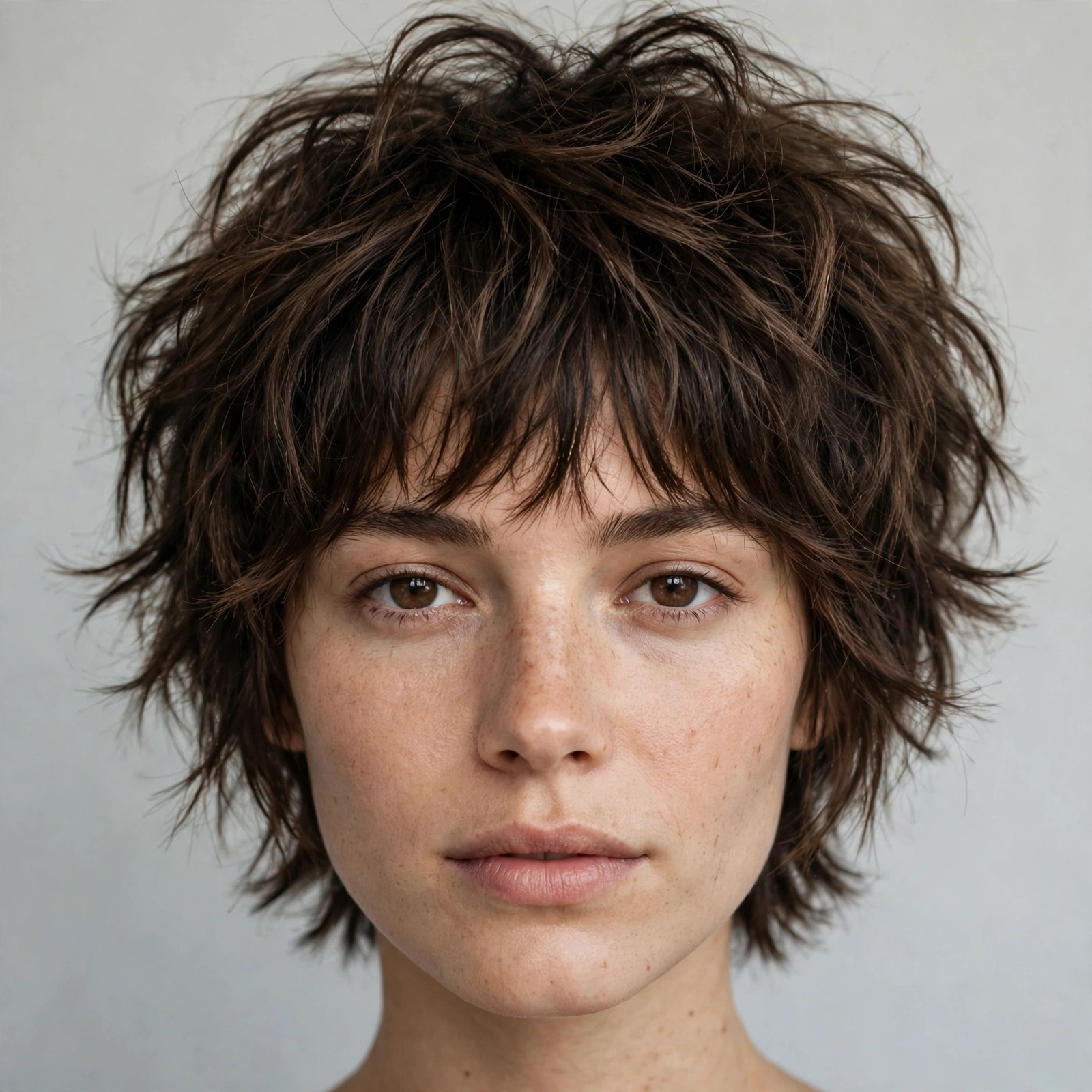
Textured Pixie
A short pixie cut with layers and texture built in throughout, rather than a smooth, uniform crop. The texturizing keeps thick hair from looking overly full or helmet-like at such a short length, and it works well for both straight and wavy textures.
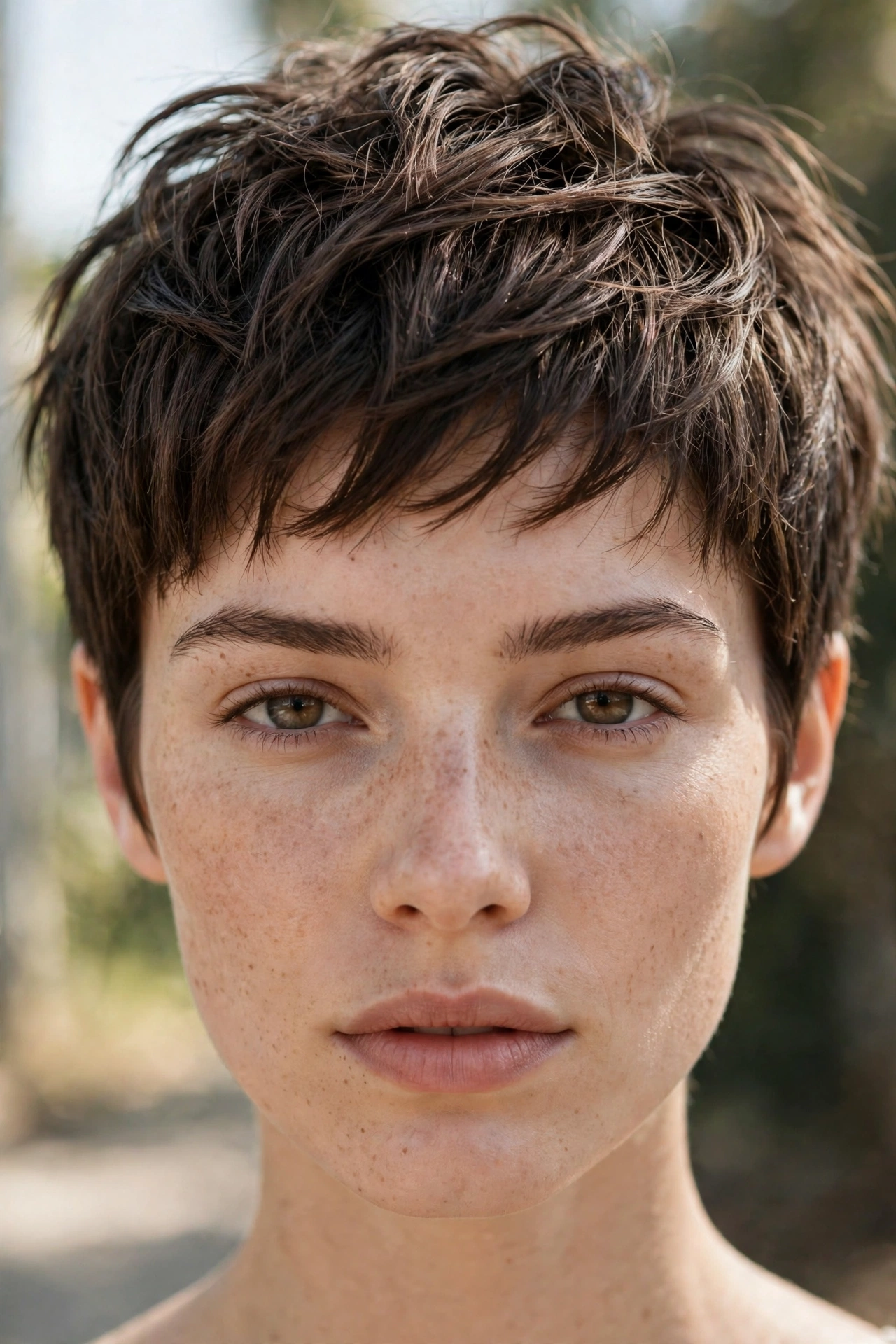
Textured Bob
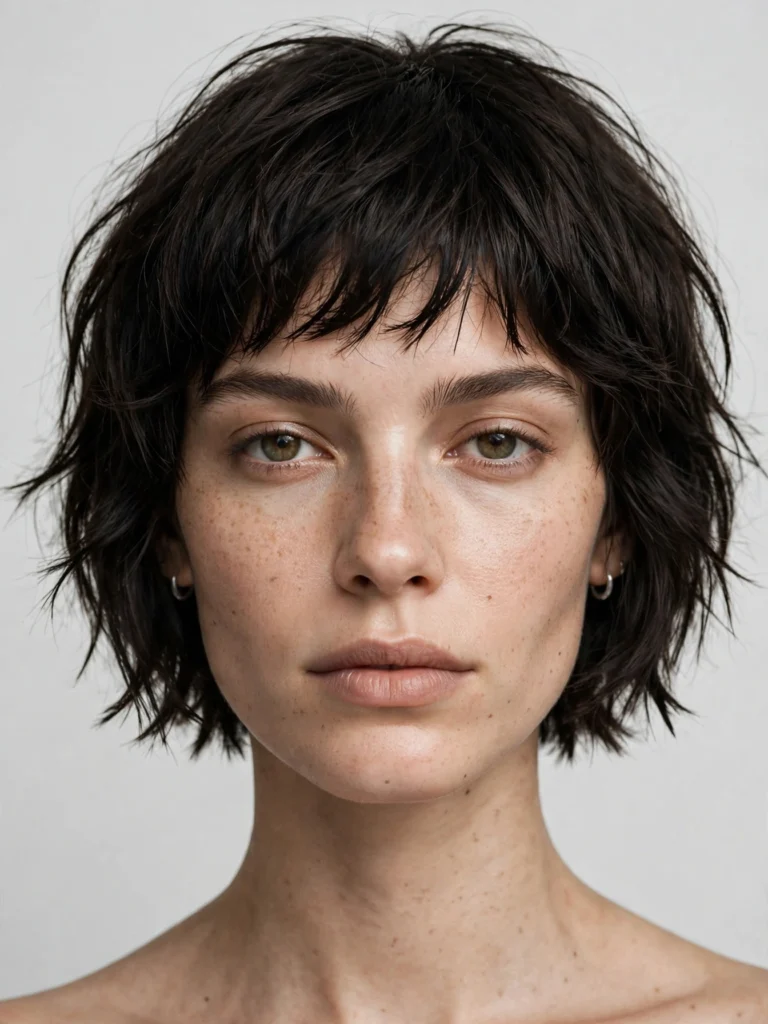
A bob cut with soft layers and texture through the ends instead of one heavy, blunt line. It’s a strong option for thick hair since a completely blunt bob at this length can look bulky, while the added texture lets the hair fall more naturally.
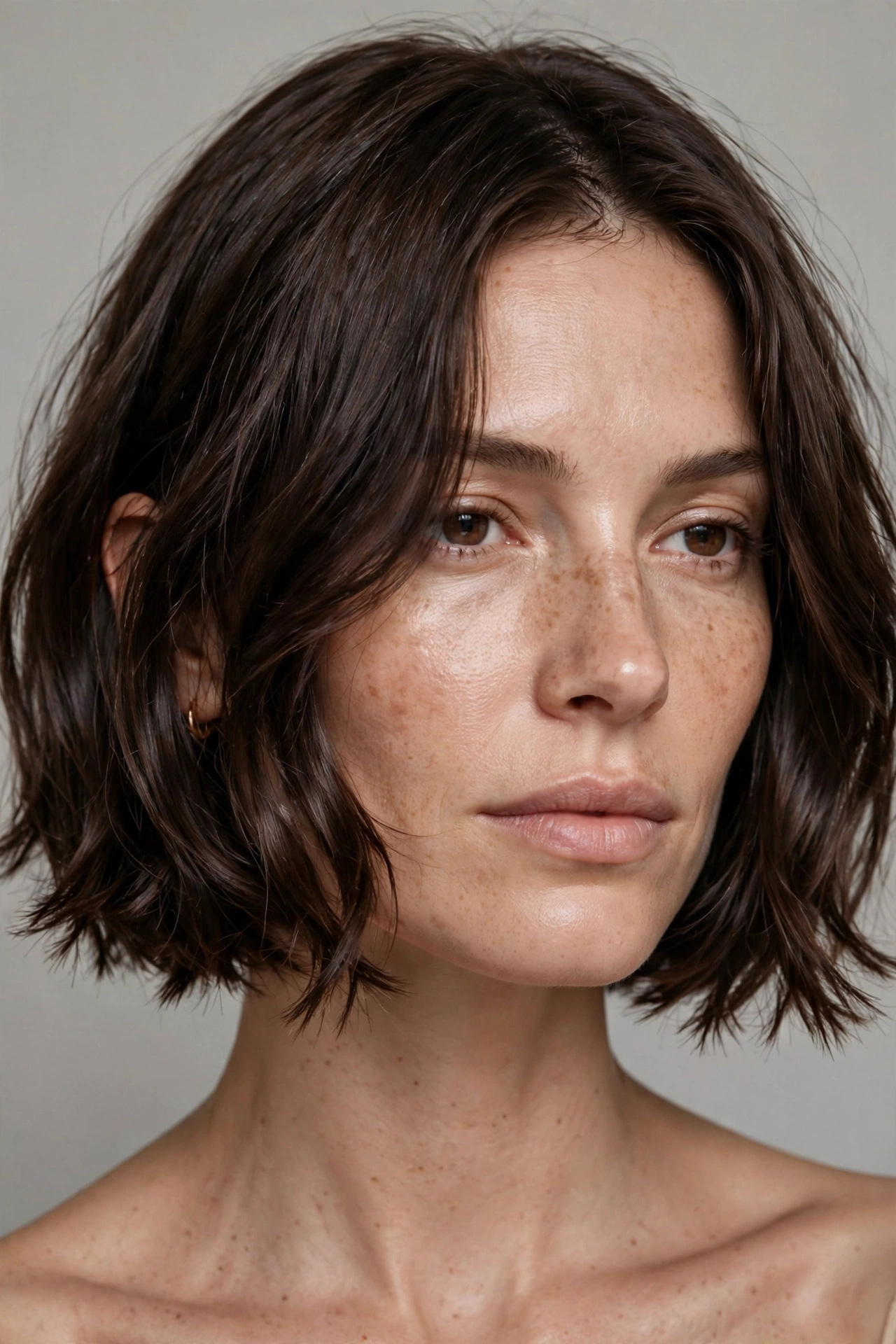
Angled or Stacked Bob
A bob that’s shorter in the back and longer toward the front, often with layers stacked underneath for shape. The angle and internal layering work together to control the volume that thick hair naturally brings to this length.
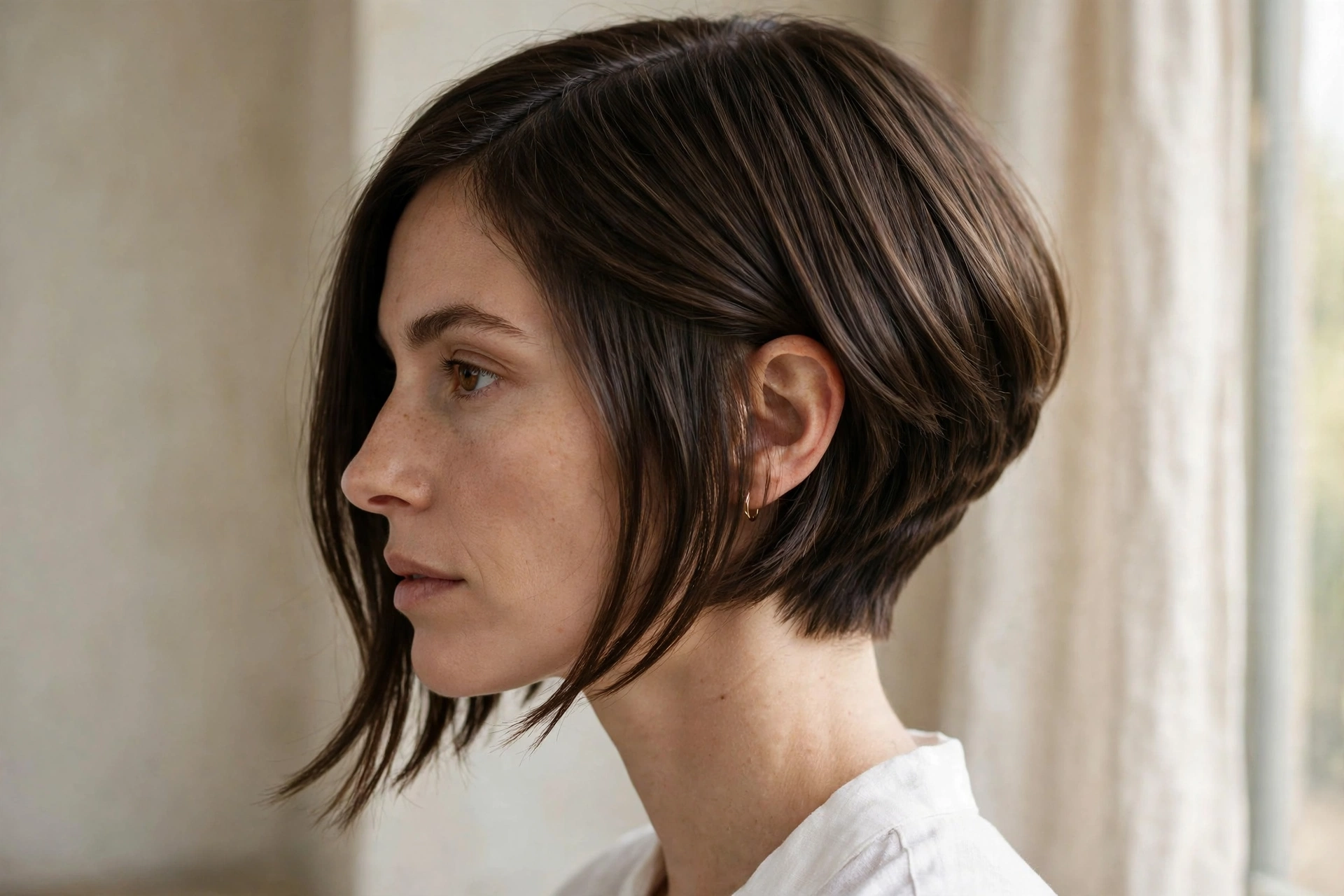
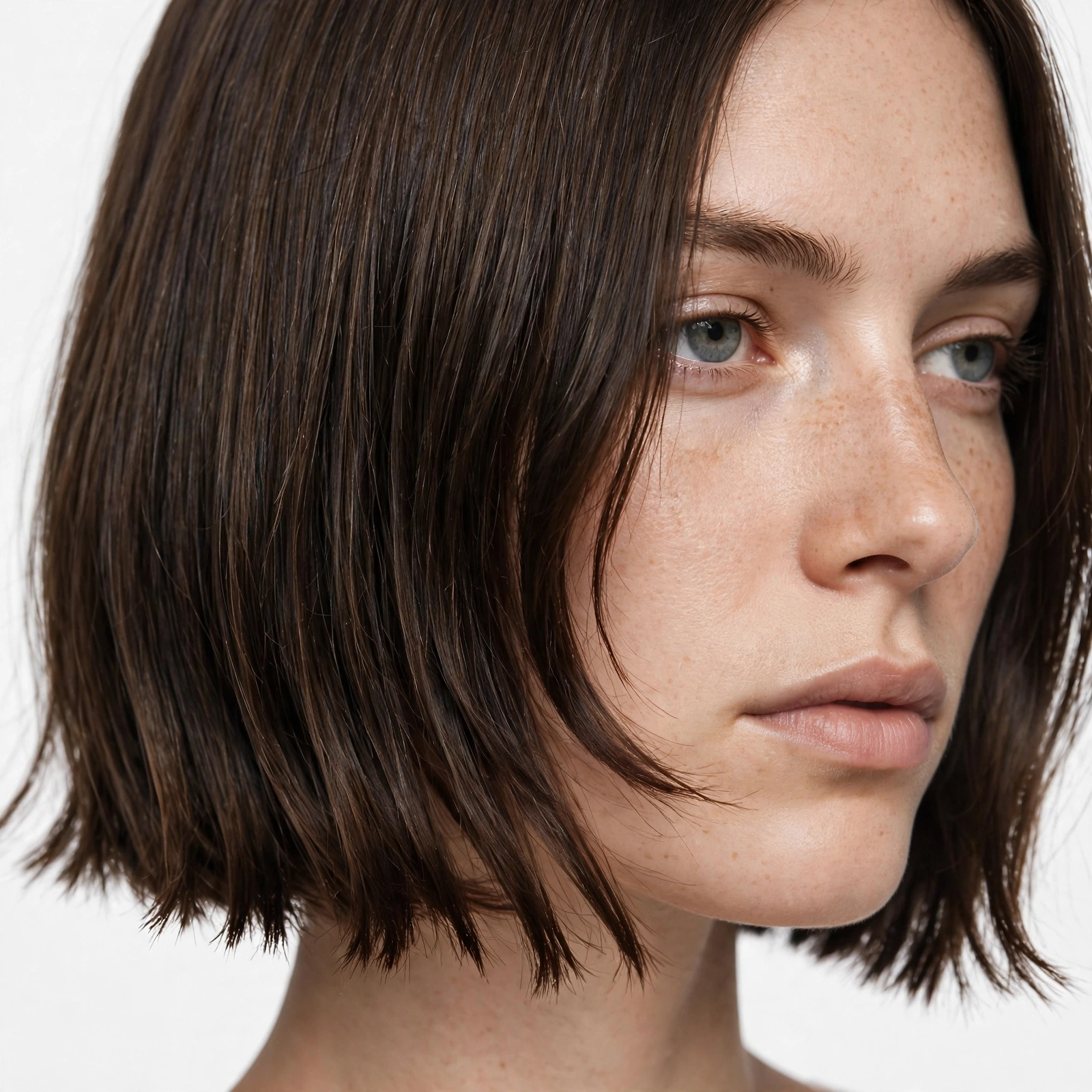
Blunt Bob with Point-Cut Ends
A bob that keeps a strong, blunt overall shape but uses point cutting along the very ends to soften the line. This keeps the graphic, structured look of a blunt cut while avoiding the stiff, block-like edge that thick hair can create with a completely straight-across cut.
Medium Haircuts
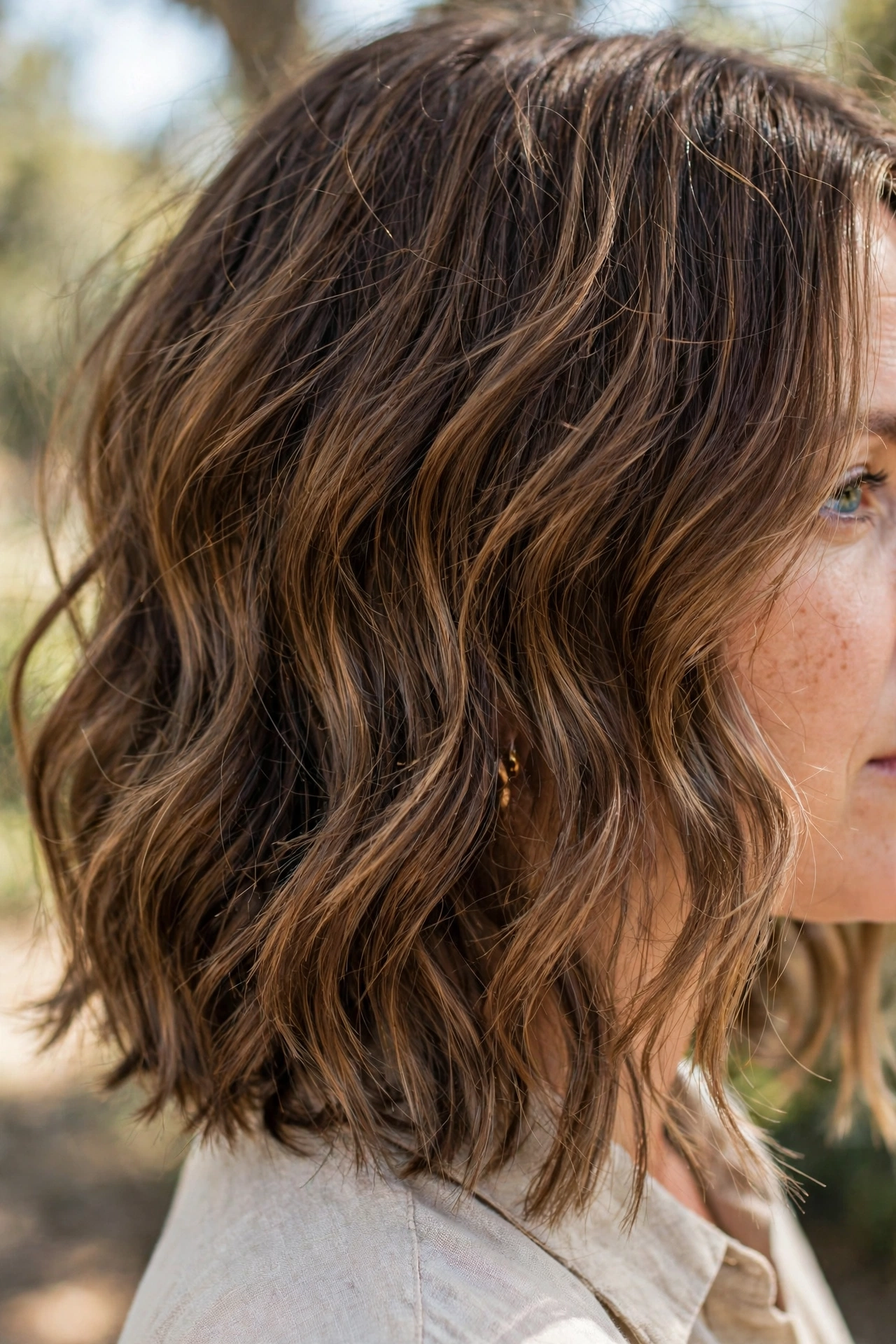
Textured Lob
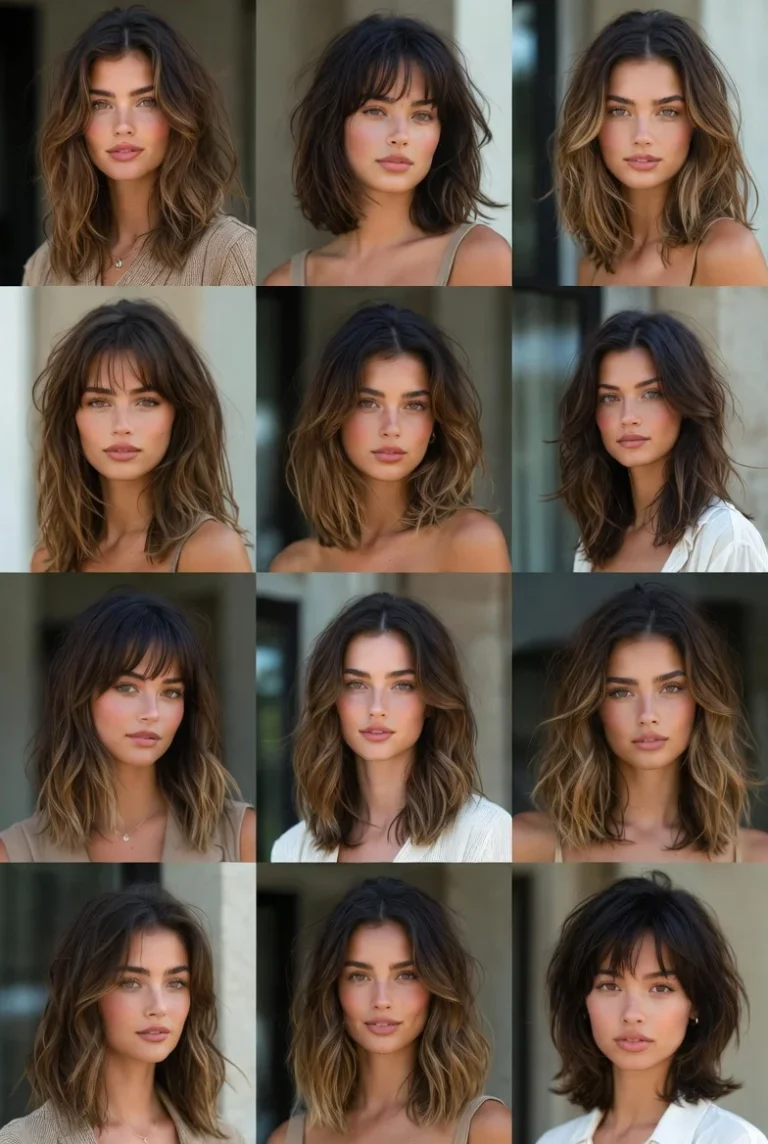
A long bob that falls at or just below the shoulders, cut with soft layers throughout. This length is often recommended for thick hair that’s carrying dead weight at the ends, since removing a few inches and adding layers can refresh the whole shape.
Classic Shag
A retro-inspired cut built entirely around choppy layers that break up density and add a tousled, lived-in texture. It works especially well on wavy or curly thick hair, since the layering encourages natural texture to show rather than fighting it.
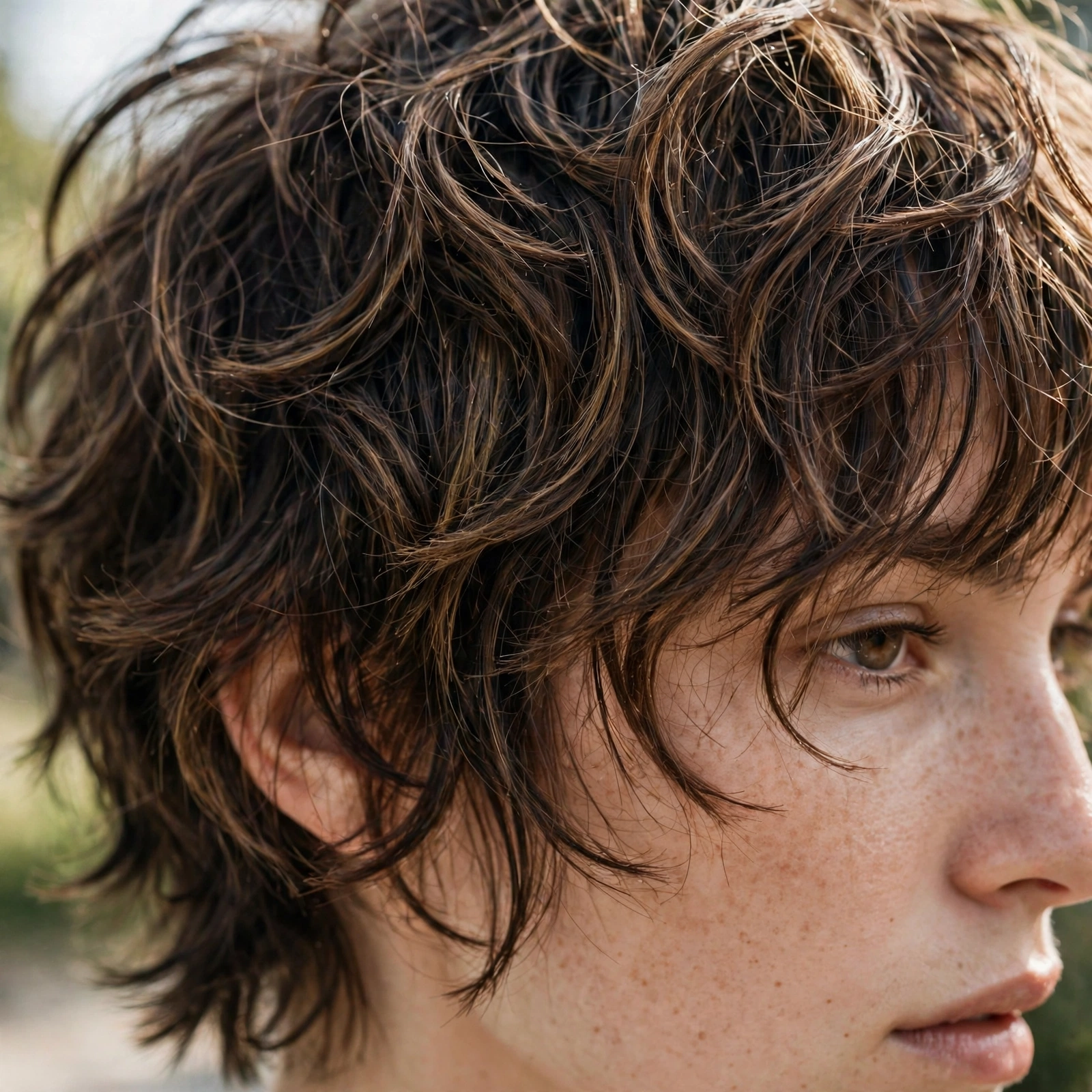
Wolf Cut
A shaggier, more textured evolution of the classic shag, with shorter layers at the crown blending into longer pieces below. It’s a strong option for thick, naturally textured hair, since it embraces volume at the top instead of trying to flatten it.

Face-Framing Layers on Medium Hair
Shorter layers cut specifically around the face while the rest of the length stays intact. This removes weight exactly where it tends to build up most, around the jawline and cheeks, and works across straight, wavy, and curly textures.
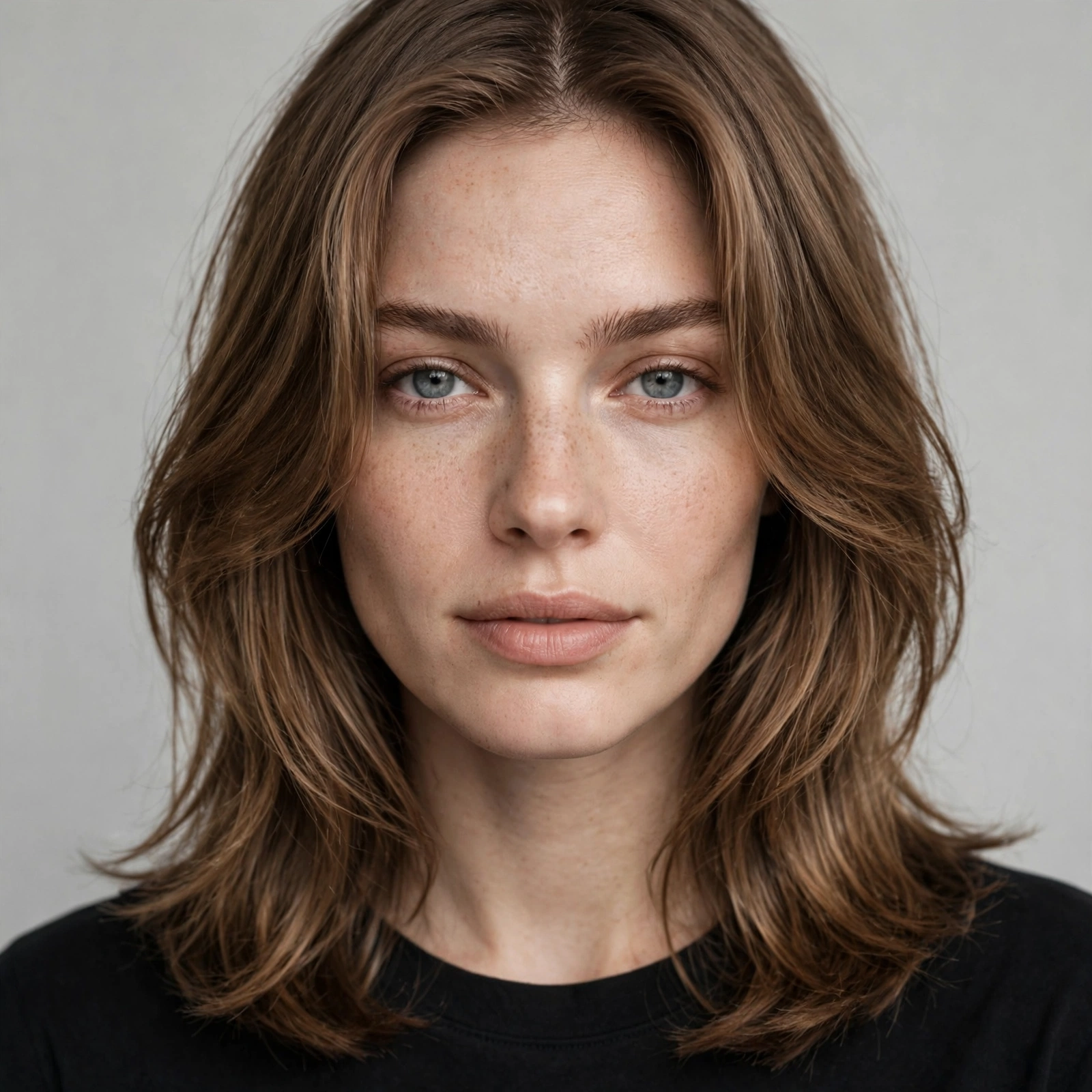
Curtain Bangs with Layers
Soft, center-parted bangs paired with layering through the rest of the cut. The bangs themselves act as another way to remove weight near the face, and they blend into face-framing layers rather than sitting as a separate, blunt piece.

Collarbone-Length Layered Cut
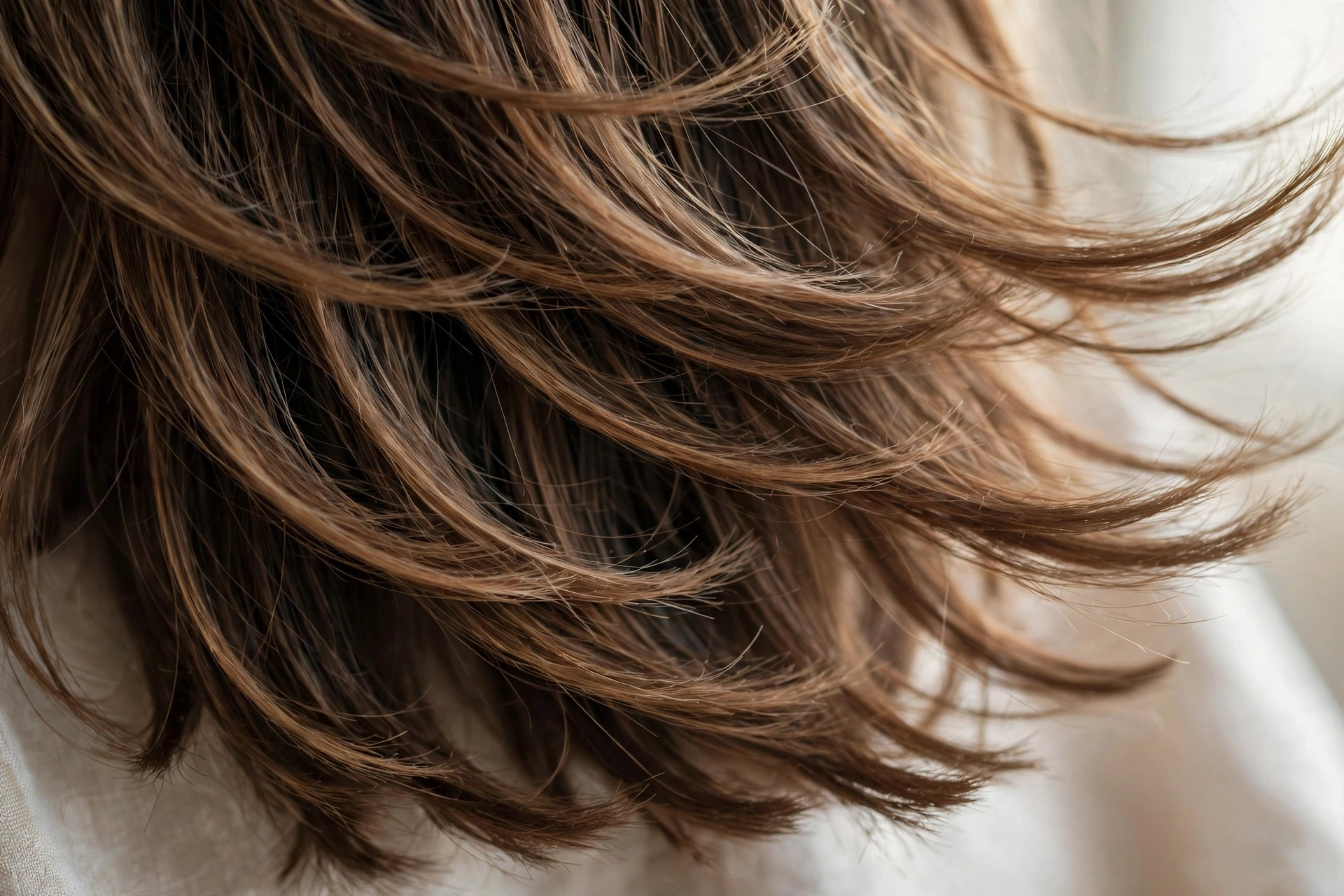
A cut that hits right around the collarbone, with layers built through the interior rather than just at the ends. This length tends to be genuinely easy to manage on thick hair, long enough for versatility but short enough that the ends don’t accumulate excessive weight.
Long Haircuts
Long Layers
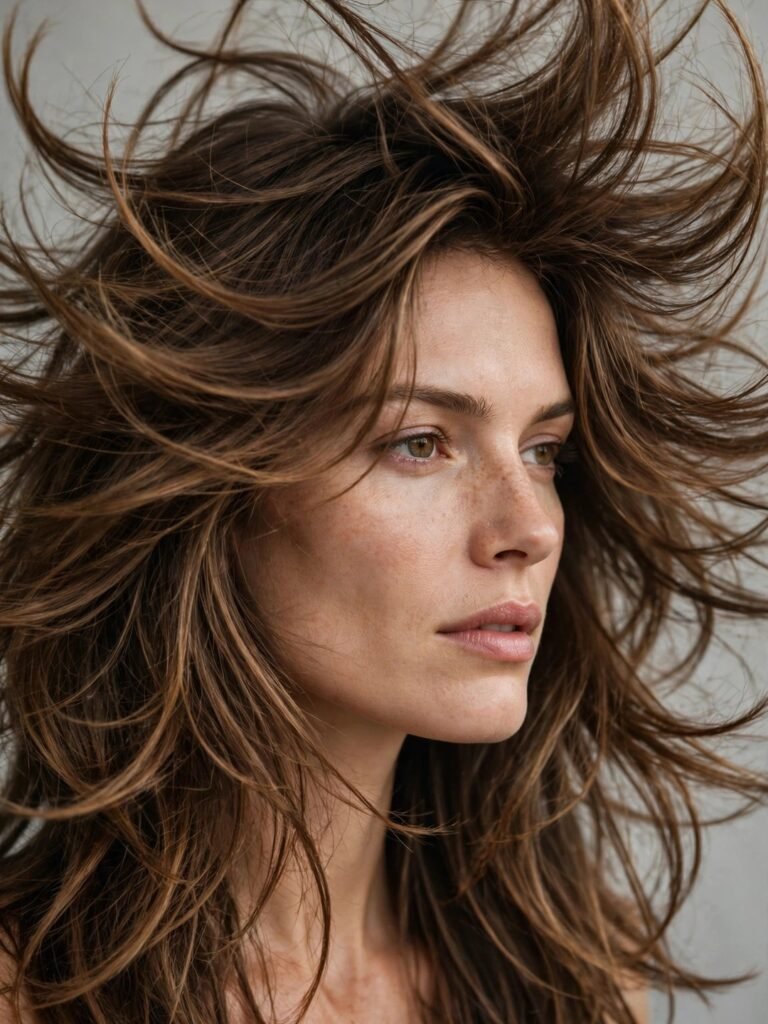
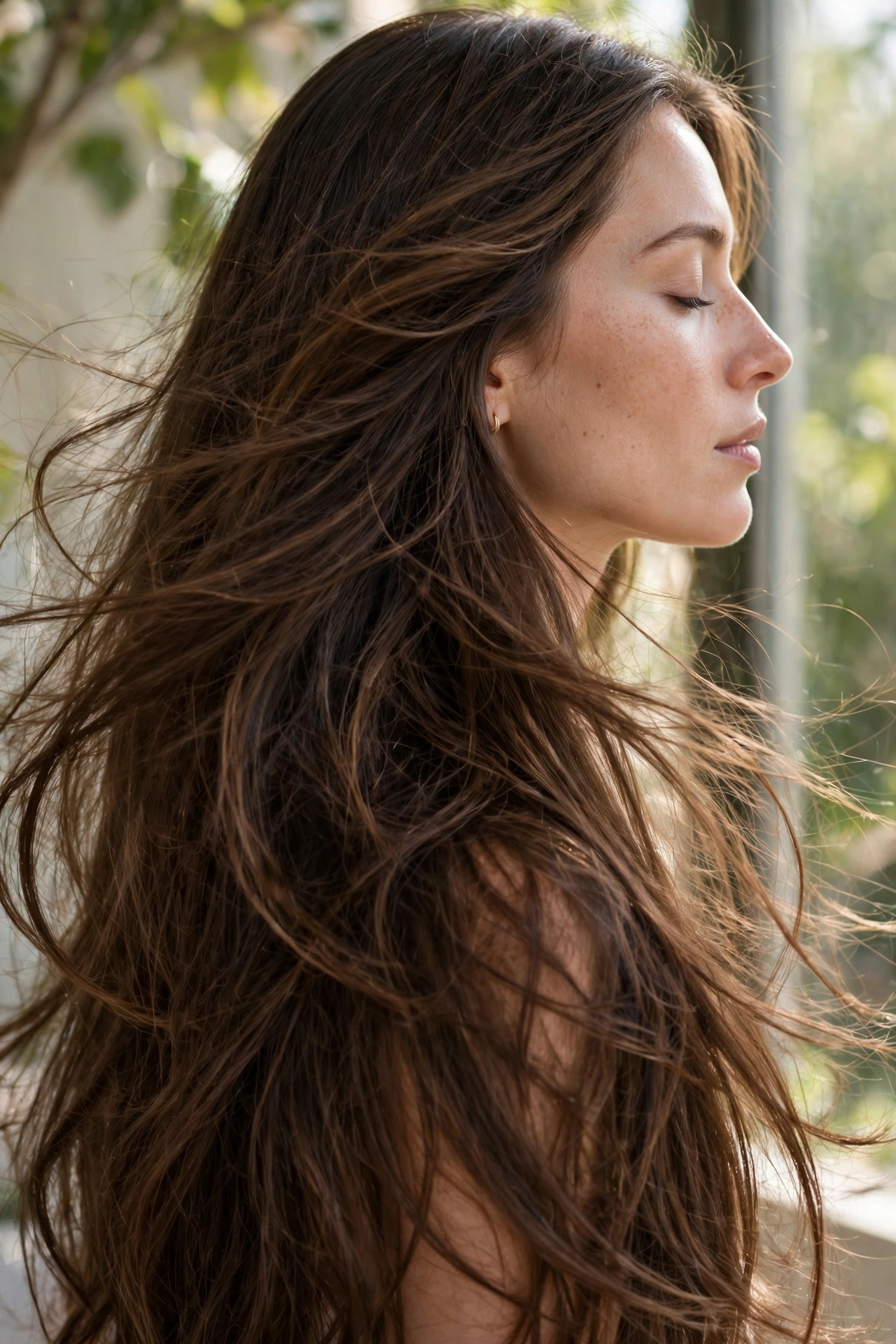
Layers cut throughout long hair to remove weight while preserving overall length. This is one of the most requested cuts for thick hair specifically because it solves the most common complaint: wanting to keep length without the hair feeling like a solid, heavy mass.

V-Cut Layers
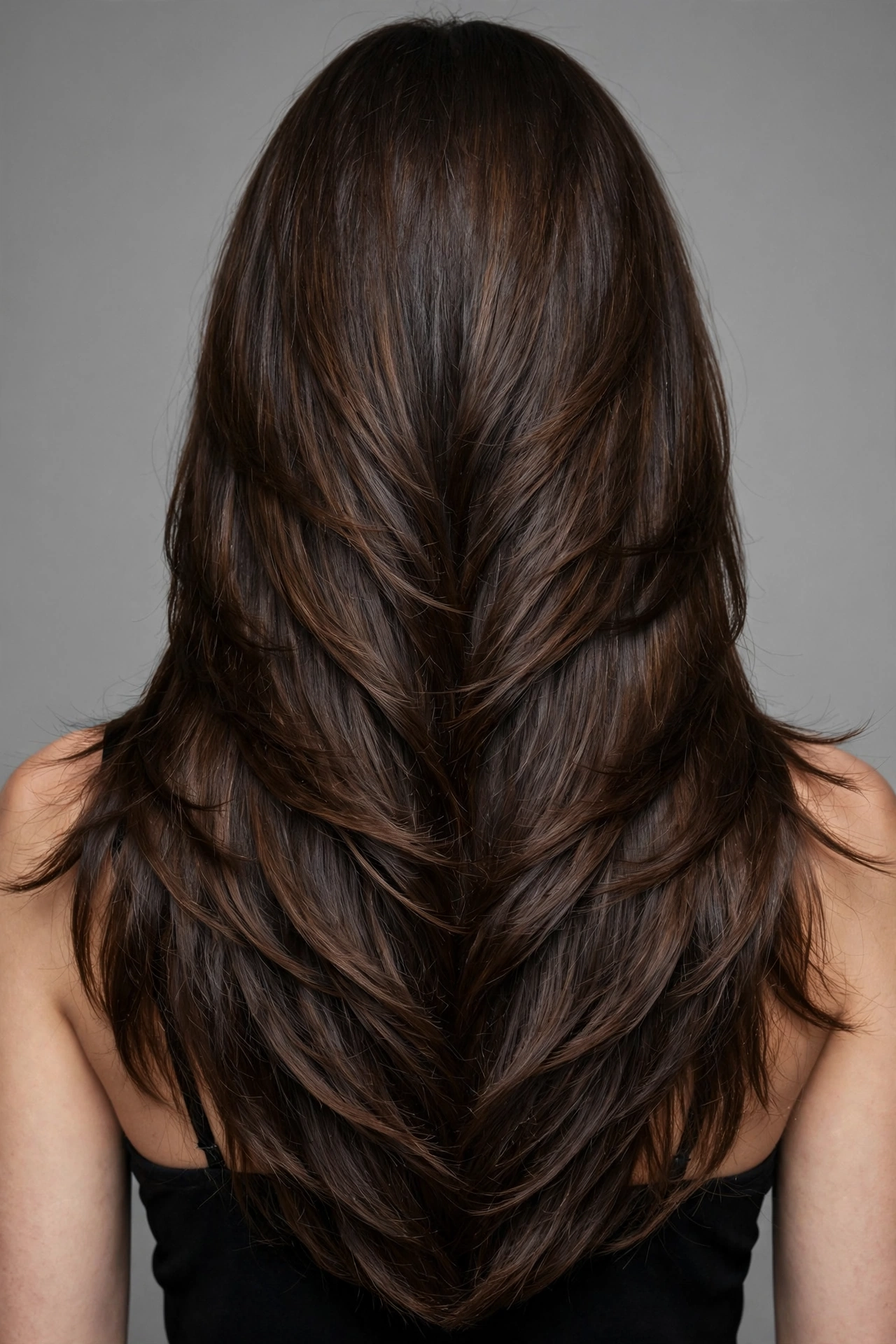
Layers cut into a deep V-shape at the back, which distributes volume more evenly through the ends instead of leaving one heavy horizontal line. The angled structure is particularly well-suited to thick hair since it reduces bulk specifically where it tends to build up at the bottom.
Long Shag
A longer version of the classic shag, using disconnected, choppy layers throughout for a textured, undone shape. It tends to look neater than a medium shag while still removing significant bulk, and it works well with waves or added texture products.

Face-Framing Layers on Long Hair
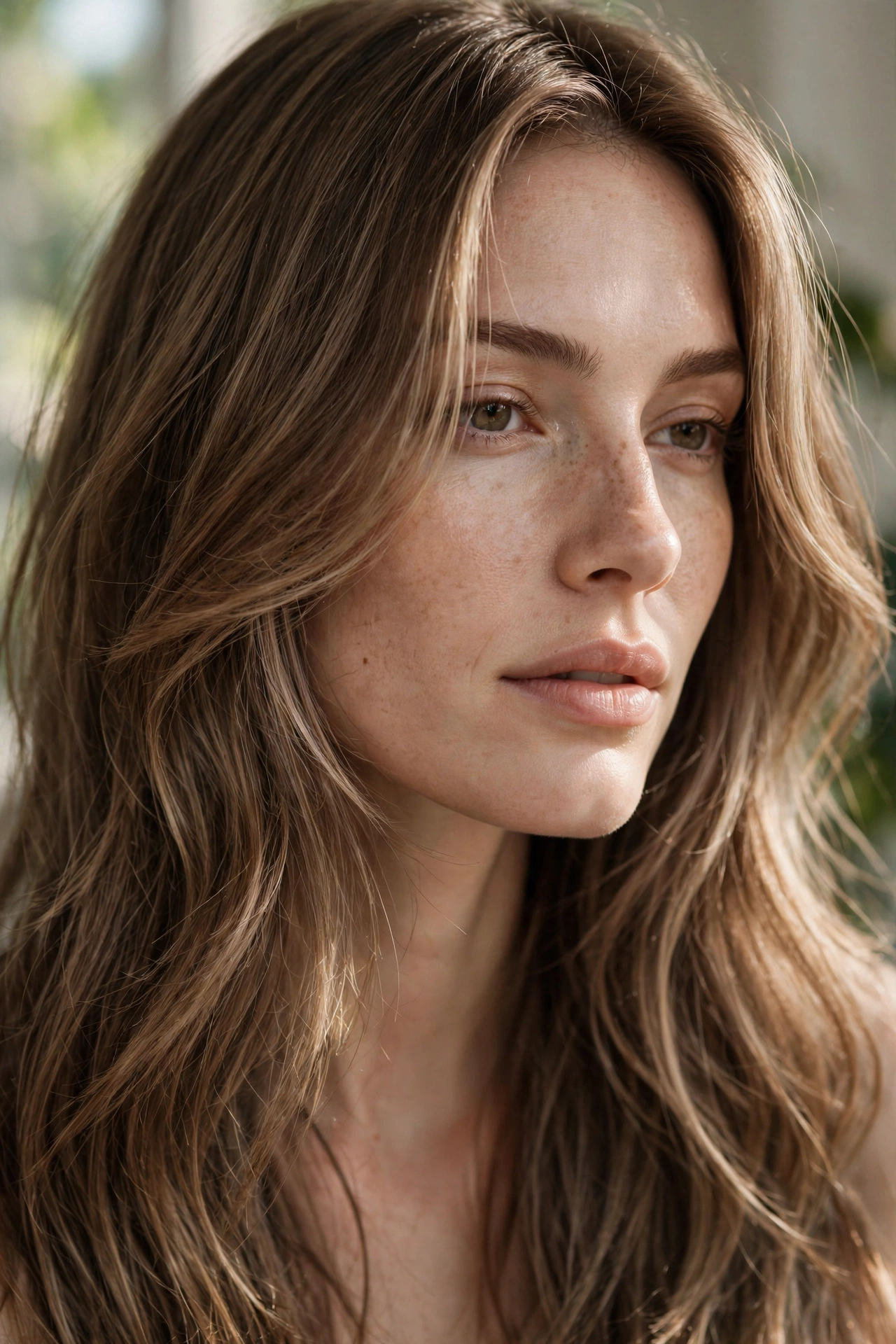
Similar to the medium-length version but with longer, more gradual pieces around the face. It softens the overall silhouette and removes weight near the features without shortening the rest of the length.
Long Layered Cut with Internal Slide-Cutting
This uses slide cutting specifically through the interior of the hair, rather than visible layers cut at set lengths. It keeps the outer perimeter intact and full-looking while quietly removing weight from the inside, which is a technique worth specifically requesting if you want length preserved with minimal visible layering.
Curly and Wavy Haircuts
Layered Curly Cut
Layers cut specifically to work with the natural curl pattern rather than layers designed for straight hair. This helps define individual curls, reduces the triangle shape thick curly hair can develop, and lets the natural texture do more of the styling work.
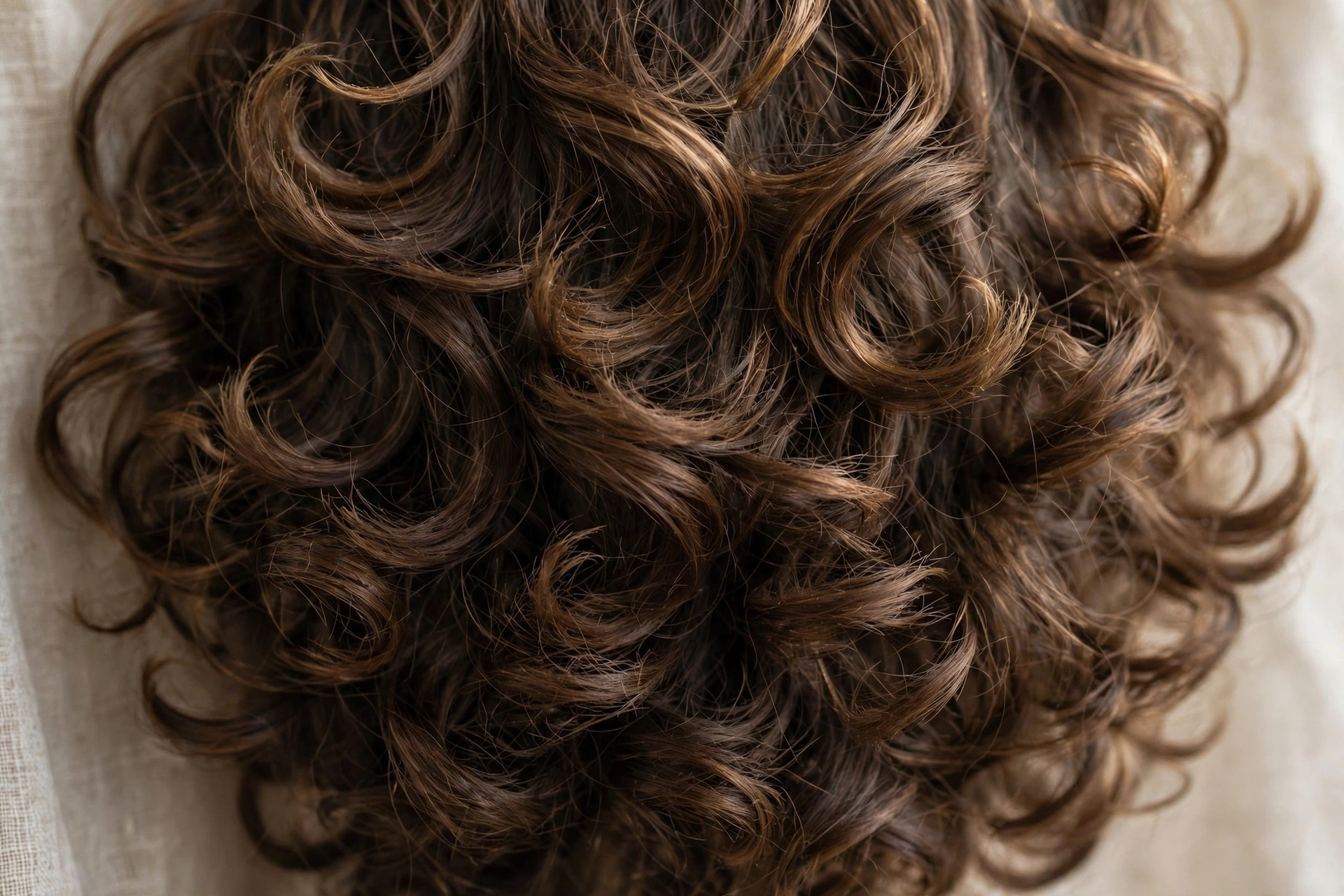
Curly Wolf Cut
The wolf cut adapted for curly texture, with shorter, choppier layers at the crown that let natural curl bounce and volume show through, blending into longer pieces below. It’s a strong option for thick curls that want more definition without losing length.
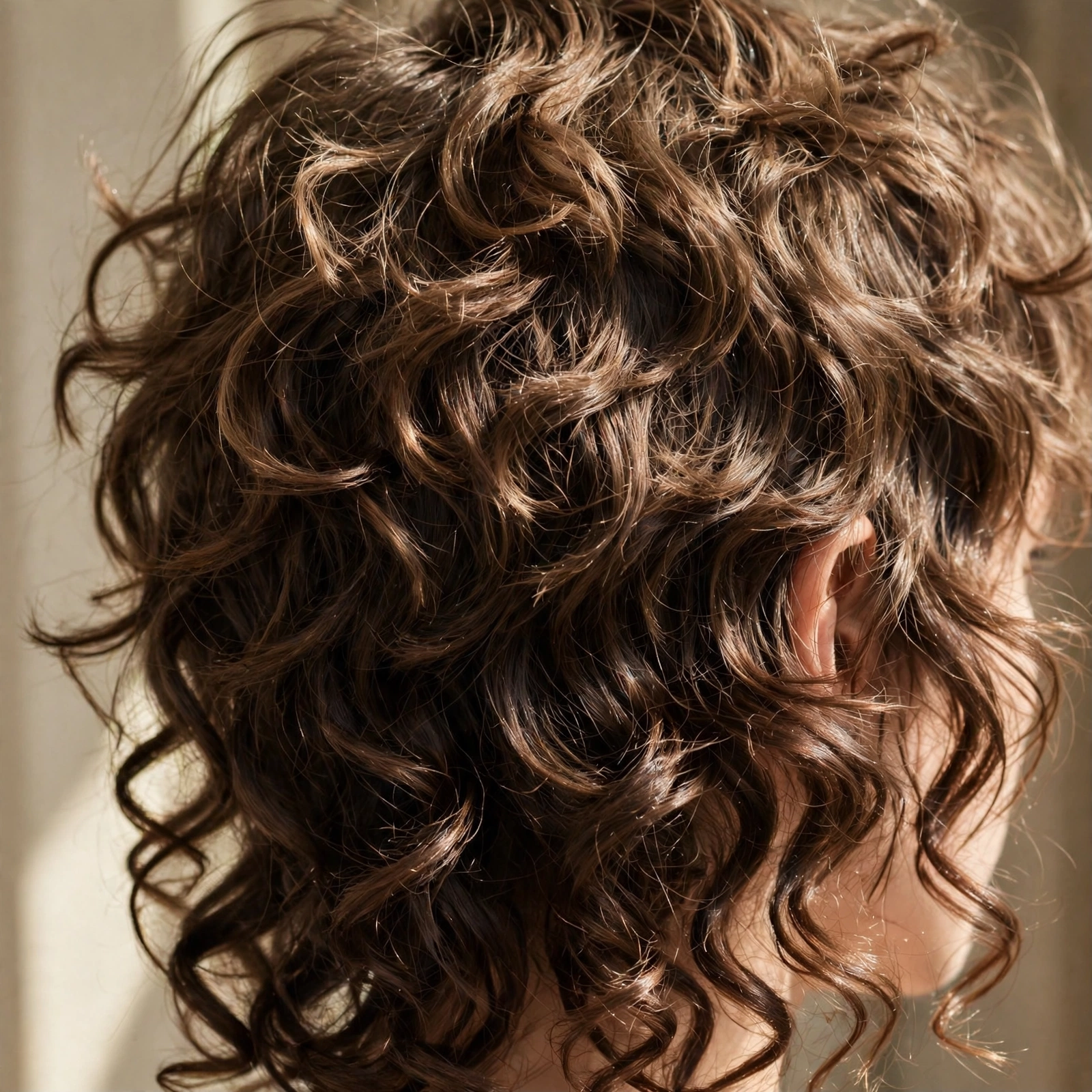
Deva-Style Curly Shaping
A cutting method built entirely around curl-by-curl shaping, usually done on dry, unstretched curls so the stylist can see exactly how each curl falls before cutting. This approach is specifically designed for thick, curly, or coily hair, since cutting curls in their natural state avoids the uneven results that can happen when curly hair is cut wet or stretched straight.
Maintenance and Cost
Typical cost ranges:
- Standard layered haircut: roughly $40 to $150, depending on salon and location
- Curly-specific cuts (like Deva-style shaping): often priced higher, roughly $75 to $200, due to the specialized technique and longer appointment time
- Thinning shear or texturizing add-on: sometimes included in the base price, sometimes a separate add-on fee, so it’s worth asking upfront
Typical trim schedule:
- Short cuts (bixie, pixie, bob): every 4 to 6 weeks, since bulk and shape show growth quickly
- Medium cuts (lob, shag, wolf cut): every 6 to 8 weeks
- Long layered cuts: every 8 to 12 weeks, though check-ins for shape maintenance can happen sooner
- Curly cuts: every 8 to 12 weeks, since curl shrinkage means length changes are less obvious between trims
Prices and timelines vary significantly by region, curl type, and stylist experience, so treat these as general planning ranges.
Frequently Asked Questions
Will thinning shears make my hair thinner overall?
Not permanently. Thinning shears remove select strands to reduce bulk, but they don’t change your hair’s actual density. Overuse, especially near the roots, can create a frayed or uneven look, so it’s best left to a stylist experienced with thick hair.
What’s the difference between layering and thinning?
Layering cuts hair at varying lengths to remove weight and add movement throughout. Thinning removes select strands at the ends to reduce bulk without necessarily creating visible length differences. Many cuts use both techniques together.
Are shorter cuts harder to manage with thick hair?
Not necessarily, but they usually need internal layering or texturizing to avoid looking bulky or triangular. A blunt short cut without any layering is the combination most likely to feel heavy at a short length.
How do I ask my stylist for less bulk without losing length?
Be specific: ask for internal layering, slide cutting, or thinning shears applied only through the interior, and clarify that you want weight removed, not length. Bringing reference photos helps avoid miscommunication.
Is curly thick hair cut differently from straight thick hair?
Yes. Curly hair is often cut dry and in its natural, unstretched state so the stylist can see exactly how each curl falls, which is different from the wet-cutting approach commonly used on straight hair.
Final Thoughts
Thick hair isn’t something to fight against, it’s a strong starting point that holds shape and volume well once the excess weight is removed in the right places. The best cut for you depends on how much length you want to keep, how much texture you’re working with, and how much styling time you’re realistically willing to put in. Bring a few reference photos from this list to your next appointment, and be specific about weight versus length so your stylist can target exactly what’s making your hair feel heavy.